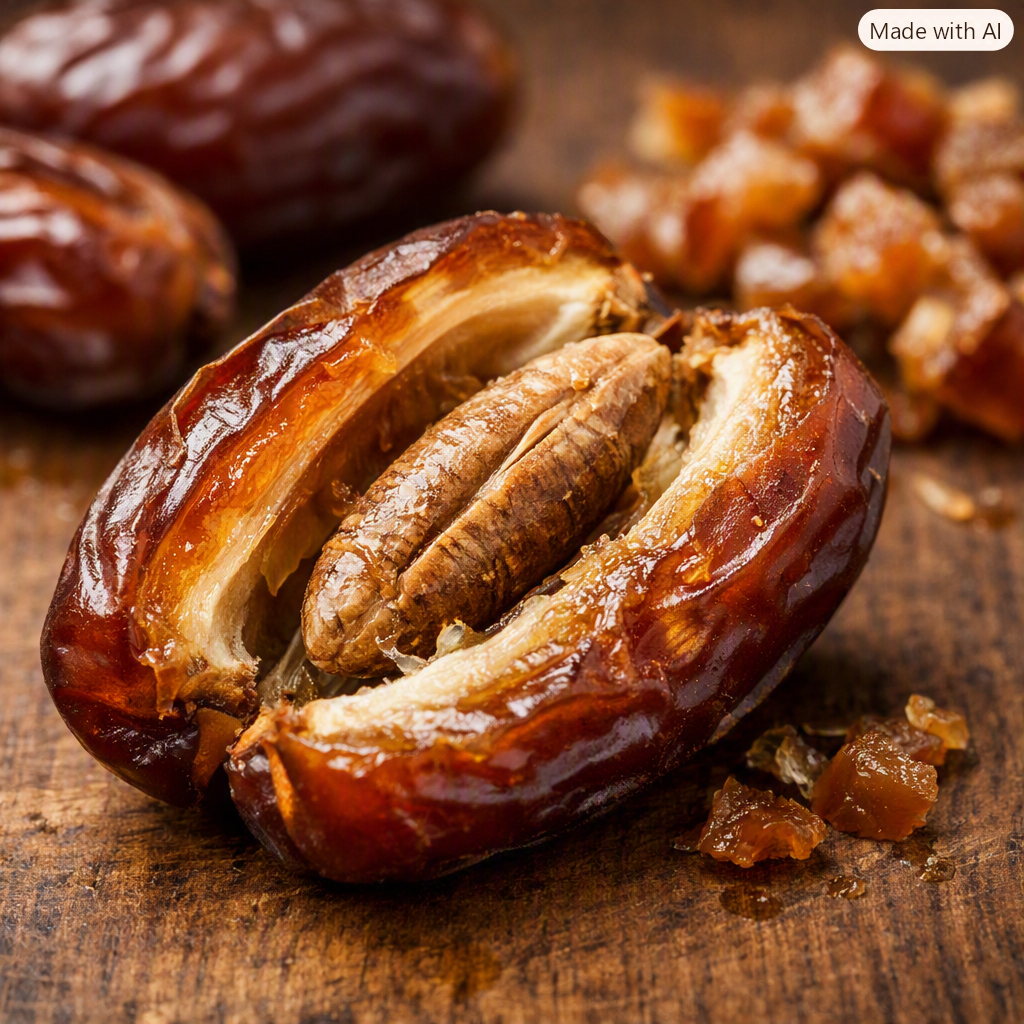
Whether you want to understand the dates benefits, explore different dates variety, or learn how dates can be included in your daily diet, this guide covers everything you need to know.
- Dates Benefits: Why Should You Include Khajoor in Your Diet?
Dates offer several nutritional benefits and can be a convenient addition to a balanced diet. They contain natural sugars, dietary fibre, potassium and other essential nutrients.
Here are some potential dates benefits:
Provide energy: Dates contain natural sugars that provide a quick source of energy.
Support digestive health: Their dietary fibre can help support regular bowel movements.
Provide essential minerals: Dates contain minerals such as potassium and magnesium.
Offer antioxidant compounds: Dates contain plant compounds that help protect cells from oxidative stress.
Make a versatile food ingredient: Their natural sweetness makes them useful in snacks, desserts and other recipes.
Dates are nutritious, but they also contain natural sugars and calories. Enjoying them in appropriate portions as part of a balanced diet is important.
- Dry Dates: A Traditional and Versatile Food
Dry dates, also known as dried khajoor, are a popular ingredient in Indian households. They have a firmer texture than many soft, fresh dates and are commonly used in traditional sweets, festive preparations and everyday recipes.
Dry dates can be enjoyed in several ways:
Eaten as a snack, according to personal preference and texture.
Added to dry fruit mixes.
Used in traditional sweets and desserts.
Ground or processed for use in selected food preparations.
Combined with nuts and seeds in homemade snack recipes.
The texture, sweetness and moisture content of dry dates can vary depending on the variety and processing method. Proper storage helps maintain their quality and flavour.
- Dates Powder: A Convenient Ingredient for Everyday Recipes
Dates powder is made by processing dates into a powdered form. Depending on how it is produced, it can be used as an ingredient in a variety of food preparations.
Dates powder is increasingly useful for food manufacturers, bakeries and home cooks looking for convenient ways to incorporate dates into recipes.
Some common applications include:
Smoothies and milkshakes.
Bakery products and selected dessert recipes.
Porridge and breakfast preparations.
Snack bars and food mixes.
Certain confectionery products.
Dates powder can contribute sweetness and a distinctive date flavour. However, it does not always behave like refined sugar in recipes, and its texture and solubility depend on how it is processed.
For businesses, factors such as powder fineness, moisture content, consistency and packaging are important when selecting a suitable product.
- Dates Bites: A Tasty Snack for Busy Days
Dates bites are small, convenient snacks made using dates, often combined with ingredients such as nuts, seeds, cocoa or coconut.
Their naturally sweet flavour makes them suitable for people looking for alternatives to some conventional confectionery products.
Dates bites can be prepared in different combinations, including:
Dates and almonds.
Dates, cashews and pistachios.
Dates and coconut.
Dates, seeds and oats.
Dates and cocoa.
These combinations can offer variety in taste and texture. Their nutritional value depends on the ingredients used, and dates bites should not automatically be considered low-calorie or low-sugar snacks.
For food brands, dates bites also offer opportunities to develop convenient snack products in different flavours, sizes and packaging formats.
- Dates in Pregnancy: What Should Expectant Mothers Know?
The topic of dates in pregnancy is often discussed because dates contain fibre, natural sugars and several minerals.
Dates can generally be included in a pregnancy diet if the individual has no medical or dietary restriction that requires otherwise.
Potential considerations include:
Dietary fibre: May help support bowel regularity.
Energy: Natural sugars provide energy.
Minerals: Dates contribute small amounts of minerals, including potassium.
Food variety: Dates can be included alongside other fruits, vegetables, whole grains and protein-rich foods.
Some studies have explored whether eating dates late in pregnancy may influence labour outcomes, but the evidence is not strong enough to guarantee a particular effect.
Pregnant women with gestational diabetes or concerns about blood sugar should discuss suitable portions with their healthcare professional. Dates should be washed and stored properly, and they should be part of a varied, balanced diet.
- Dates Protein: Do Dates Provide Enough Protein?
People searching for dates protein often want to know whether dates are a good source of protein.
Dates contain a small amount of protein, but they are not considered a high-protein food. Their main nutritional contribution comes from carbohydrates, including natural sugars, along with dietary fibre and certain minerals.
If you want to make a more balanced snack, consider combining dates with foods that provide more protein, such as:
Almonds and peanuts.
Pistachios and other nuts.
Seeds.
Plain yoghurt.
Milk or suitable fortified alternatives.
For example, dates blended with milk and nuts can make a convenient snack, with the overall protein content depending on the quantities and ingredients used.
Understanding the nutritional profile of dates helps consumers choose the right products for their dietary needs.
- Dates Variety: Exploring Different Types of Khajoor
There are many dates variety available, each with its own flavour, texture, size and moisture content.
Some commonly known varieties include:
Medjool: Large dates known for their soft texture and rich, caramel-like flavour.
Deglet Noor: Often semi-dry, with a firmer texture and delicate sweetness.
Ajwa: A well-known variety associated with Saudi Arabia.
Safawi: Generally dark in colour, with a soft to semi-soft texture.
Sukkari: Known for its pronounced sweetness and soft texture.
Kimia: Commonly sold as soft, dark dates, particularly in Indian markets.
Dry dates (Chhuhara): A dried form of dates used in traditional foods and various preparations.
Availability, quality and characteristics may differ according to origin, harvest, storage and processing.
For wholesalers, distributors and food manufacturers, selecting the right variety depends on the intended application, customer preferences, moisture level, size, appearance and required quantity.
- Dates for Women: A Nutritious Addition to a Balanced Diet
The search term dates for women reflects an interest in how dates may fit into women’s everyday nutritional needs.
Dates can be a useful food choice for women because they provide energy, fibre and minerals. However, their benefits are not exclusive to women, and they should not be viewed as a treatment for medical conditions.
Here are some ways women may include dates in their diets:
As an everyday snack: Enjoy a suitable portion between meals.
For digestive support: Their fibre can contribute to normal bowel function.
Before physical activity: Their carbohydrates can provide readily available energy.
During pregnancy: They may be included when appropriate, with individual medical guidance where needed.
In homemade recipes: Add chopped dates to porridge, yoghurt, smoothies or snack mixtures.
Dates alone cannot meet all nutritional requirements. A varied diet that includes protein, healthy fats, vegetables, fruits and whole grains remains essential.
- How to Choose and Store Quality Dates
Choosing suitable dates involves more than looking at their appearance. Consider the following factors:
Check the product quality: Look for dates appropriate to the intended use, with no signs of mould, fermentation or unusual odour.
Choose the right texture: Soft dates may suit direct consumption and snack products, while firmer or dry dates may work better for certain traditional preparations.
Review the packaging: Properly sealed, food-grade packaging helps protect dates from contamination and moisture.
Store them correctly: Follow the product’s storage instructions. Depending on moisture content and packaging, dates may need a cool, dry place or refrigeration.
For bulk buyers, consistent quality, traceability, reliable supply and suitable packaging are important considerations when sourcing dates.